Sultan Bahu
Monday, January 31, 2005 By Maryam

Alexandria by the sea
"Everyone asks for firmness in faith, but few for firmness in love.They ask for faith and are ashamed of love, such arrogant hearts!
Faith has no idea of the place where love transports you.
I swear by my faith, Bahu, keep my love firm!"
From Death Before Dying, The Sufi Poems of Sultan Bahu. Translated and Introduced by Jamal J. Elias (University of California Press, 1998).
Who was Hazrat Sultan Bahu
Born on 1628 AD (1st Jamadi -us Sani 1102 H) in Shorkot, Pakistan from a very pious mother who, in one dream, was told her son would become a great sufi master and that at birth he would be a wali Allah, which means "friend of Allah".
Since his childhood people could perceive a special light on his face and he didn't seek education from any group because, as he used to say, he had been enlightened with the ilm al-laduni (light of inspired knowlege, or just inspired knowlege) In Sufi circles, he is called Sultanul Arifin, which means the Sultan of Gnostics.
His path in Sufism was made intuitively. Only his mother tought him some essential exercices in dhikr (The Invocation of Allah and His Names). Even though he had fatherly obligations, his love for Sufim always leaded him to wander throughout the world of Mysticism, travelling to sacred lands, and meeting people who would become his fellow friends in the world of Tasawwuf. As a seeker of truth, he spent his life travelling to remote places, unknown and difficult trips and his love for the Sufism went far beyond. He went to the Saraiki region , up to Sindh, he went to Delhi and met the Emperor Aurangzeb.
In 1961 AD he died in Shokrot, where he was buried near the river. After some floods, his body was moved to a more secure place , actually Darbar Hazrat Sultan Bahu (District Jhang, Punjab).
Since his childhood people could perceive a special light on his face and he didn't seek education from any group because, as he used to say, he had been enlightened with the ilm al-laduni (light of inspired knowlege, or just inspired knowlege) In Sufi circles, he is called Sultanul Arifin, which means the Sultan of Gnostics.
His path in Sufism was made intuitively. Only his mother tought him some essential exercices in dhikr (The Invocation of Allah and His Names). Even though he had fatherly obligations, his love for Sufim always leaded him to wander throughout the world of Mysticism, travelling to sacred lands, and meeting people who would become his fellow friends in the world of Tasawwuf. As a seeker of truth, he spent his life travelling to remote places, unknown and difficult trips and his love for the Sufism went far beyond. He went to the Saraiki region , up to Sindh, he went to Delhi and met the Emperor Aurangzeb.
In 1961 AD he died in Shokrot, where he was buried near the river. After some floods, his body was moved to a more secure place , actually Darbar Hazrat Sultan Bahu (District Jhang, Punjab).
Mainly his literature was written in Persian. He loved composing ghazals and poems. He also wrote in Punjabi where he expresses his exalted love for the Divine. There are many "inspired writings" written in a style peculiar to him. He practiced Fikr (spiritual poverty).
This verse appears on a wall that stands adjacent to his tomb:
Oh noble Sultan Bahu! in the realm of reality, you are perfect.
Help me in all the spiritual states ____ in interiority as well
as in exteriority.
For more information regarding Sultan Bahu, please visit "Sultan Bahu"
This verse appears on a wall that stands adjacent to his tomb:
Oh noble Sultan Bahu! in the realm of reality, you are perfect.
Help me in all the spiritual states ____ in interiority as well
as in exteriority.
For more information regarding Sultan Bahu, please visit "Sultan Bahu"
Category: sufi masters


The Alchemical Marriage of Intellect and Soul
Monday, January 31, 2005 By Maryam

Introduction:
Ibn al'Arabi wrote the K. 'Anqâ' mughrib, or The Fabulous Gryphon in his native Andalusia (Spain) in 596/1200, less than two years before his decisive move to the East following his first pilgrimage to Mecca. Thus, like its mythical namesake, the apocalyptic Gryphon itself - which will arise out of the West to announce the end/beginning of an age - the book was intended to mark the exodus from the author's early life in the Maghrib and to proclaim his advent in the Islamic heartland where he would achieve lasting fame as the Shaykh al-Akbar and Seal of the saints. The 'Anqâ' is written in a highly symbolic language, of which the following translated selection is a typical example. Here a complex allegory of mystical-creative realization is consummated in a vision of the nuptial union of the Prophet Muhammad and his favorite wife, A'ishah (the "Little Fair One"). Chosen to keep the certified dower as the bridegroom entered the marriage-chamber with his new bride for the night, when the dawn broke Ibn al-'Arabi realized that the symbolic lovers had enacted the initiatic union of his own soul and higher mind. This orgic celebration of the alchemical marriage of opposites is developed further in the ensuing poem, where the author, again, assumes the role of male and female, active and passive, in the wholeness of that "Peace which passes understanding."
From: The Fabulous Gryphon ('Anqâ' Mughrib)
Since that which is true in Vision is a major part of Prophecy, we swore our belief in what such Vision confers and conveys of the Favors of the Real (Praised be He!). For I entered the House of Lights and let down the curtains and the veils, jealously protective of the harem. Then, while I was conversing intimately with the Real in His presence, the attraction of a Mighty One attracted me to him, and the Real installed me in the Station of the 'Ocean' - the waves of which heave and overflow, one entering into another and rising aloft. And I was in a State which no one can know but he who has borne it, and no one describe but he who has seen it, as has been said:
No one knows Desire except for one who bears it,
nor fervent Longing, but he who suffers from it.
... Now, consider and contemplate, O Most-perfect Saint, a Prophet whose body had been lost, while the memorial of his Way remained in Tradition: Called up from his tomb by night, he was led forth to his Gathering, the Living one joining with the dead - who, then, was 'gathered up,' the Lord of the House remaining in the House, which thus was filled with life!
Then [the Prophet Muhammad] requested the hand of his 'Little Fair-One' [A'ishah] from his 'Noble One' [Abû Bakr al-Siddîq], plucking her from the hand of his Friend (sadîqu-hu). He proposed for her a bridal-price (sadâq) the figure of which was unknown to me, and requested of me a testimony to that effect. So he wrote on a piece of red silk a document in shining gold, and I was the first, by his permission and command (May God bless him!), to witness his dower - that being in his highest Stopping-place and most-manifest Station. When he had so commanded, [the Prophet's] dower was left in my care, and he entered his dwelling with his Bride, secluding himself with her, while the dower remained in my possession till the expiry of my term.
Then, when the Dawn broke for him who has two eyes, bringing together for me the Two Lights, I did not find a 'Bride' ('irs) or a 'Husband' (ba'l) other than my own Essence, nor a dower other than my own Nature and attributes. For I was myself both the Husband and the Bride, and I married together the Intellect and the Soul. And the 'Little Fair One' became purified by her Husband, supported by the firm will of her Intellect.
I marveled at my affair - that there was none but me! Thus, I arrived at the lifting of the veils on matters concealed: And I marveled at a Shore which has no sea for its complement to seek refuge in, and at a Sea without a shore for its waves to break upon; and at a Speaker of realities without a tongue and places of articulation, and a Silent One who ceases not to summon and show the Way to God; and a Sphere without location which is not known to anyone, nor does anyone not know it; and a Dome without supports, and a rich Earth which is not based on causes desecrated by being mentioned and adulterated by Thought. For its Causes are, rather, from the Presence of That which occurs not to the mind of man, nor does the attentive ear hear its report, nor eye-sight perceive it truly.
Translated by Gerald Elmore
Gerald Elmore is a postdoctoral research fellow at Yale University, where he is engaged in an in-depth study of works and teachings of Ibn 'Arabi.Picture Source
Category:
sufism
tasawwuf
ibn arabi
Tú
Monday, January 31, 2005 By Maryam

Así debe brillar
Así debe ser
Aquello que ansío sentir
Como un sueño, como algo que nunca antes imaginé
Ni siquiera percibiendolo
Como un balcón que ofrece una vista espectacular
Tan intensa, haciéndome sentir a punto de perder gravedad,
y cayéndome e izándome, navego hasta un punto lejano,
soportada sobre una estrella,
Con temor y seguridad a la vez
Así debe ser en mi imaginación
lo que no puedo siquiera imaginar
Mi deseo, mi amor ardiente
por Tí, por Tu forma, figura, color, aroma, sensación
Y sé que voy vagando todavía, sintiendote cerca, sintíendote lejano
Las aguas doradas deben ser como cabellos sobre un lecho
Deben ser como ríos de cristal dorado
o realidades que parecen sueños
Mi sombra me persigue dia y noche, y nunca deja de decirme:
Aqui está, más está alli, y el estar es el ser. Camina por el sendero de tu corazón....
hasta que llegues a un techo que cubra todo tu ser.
Y entonces el techo se abrirá, pero antes....
antes, tendras que soñar.
Así debe ser
Aquello que ansío sentir
Como un sueño, como algo que nunca antes imaginé
Ni siquiera percibiendolo
Como un balcón que ofrece una vista espectacular
Tan intensa, haciéndome sentir a punto de perder gravedad,
y cayéndome e izándome, navego hasta un punto lejano,
soportada sobre una estrella,
Con temor y seguridad a la vez
Así debe ser en mi imaginación
lo que no puedo siquiera imaginar
Mi deseo, mi amor ardiente
por Tí, por Tu forma, figura, color, aroma, sensación
Y sé que voy vagando todavía, sintiendote cerca, sintíendote lejano
Las aguas doradas deben ser como cabellos sobre un lecho
Deben ser como ríos de cristal dorado
o realidades que parecen sueños
Mi sombra me persigue dia y noche, y nunca deja de decirme:
Aqui está, más está alli, y el estar es el ser. Camina por el sendero de tu corazón....
hasta que llegues a un techo que cubra todo tu ser.
Y entonces el techo se abrirá, pero antes....
antes, tendras que soñar.
Maryam
Category:
sufi poems
"Dervish" and "Fakir": The Outsider's View of Sufism
Saturday, January 22, 2005 By Maryam

THE BEGINNINGS OF THE MODERN STUDY OF SUFISM lie in the colonial period (roughly 1750-1950), when many of the basic concepts and categories that govern our understanding of the term were first invented. Since the very concept of Sufism is hotly contested among both Muslims and non-Muslims today, it is important first of all to examine briefly the historical development of the European study of Sufism, in order to disentangle the issues underlying the current debate. The modern concept of Sufism emerged from a variety of European sources, including traveler's accounts of exotic lands and Orientalist constructions of Sufism as a sect with a nebulous relation to Islam. When this picture of Sufism is compared with the internal documentation of Sufi tradition, a number of mismatches appear. Outsider terminology for Sufism stressed the exotic, the peculiar, and behaviour that diverges from modern European norms; in the context of colonialism, this terminology emphasized the dangers of fanatic resistance to European rule.
The two terms that best sum up early European attitudes to Sufism are fakir (Arabic faqir) and dervish(the Turkish pronunciation of Persian darvish). Both words mean more or less the same: faqir is the Arabic word for "poor man," and dervish (probably derived from a term meaning "standing by the door") is the Persian equivalent.
The term fakir has a more complicated history, because Persian-writing officials of the Mughal empire in India used the term to describe non-Muslm ascetics, such as yogis, along with Sufi ascetics and wayfarers. The British inherited this terminology when they conquered most of India, and in nineteenth-century English, fakir (or fakeer) was used almost exclusively for Hindu ascetics, whether of the organized monastic fraternities or those whom the Birtish described as "wandering rogues." The accidental resemblance of the term to the English word faker seems to have encouraged the impression that these ascetics were all frauds and mountebanks.
In contrast to these outsider's impressions, in their original contexts, both dervish and fakir
were terms that signified spiritual poverty, being poor in relation to God, and hence being dependent upon him. As in other religious traditions, poverty for the Sufis was a sign of turning away from the world and focusing on the divine reality. "Poverty is my pride," the Prophet Muhammad is reported to have said. Yet the reports of travelers concerning the fakirs and dervishes of the East created a totally different portrait of bizarre behavior that was already a cultural icon over a century ago. Popular American songs of the nineteenth century refer to the dancing dervish as an image of wild and frantic activity. Magazine cartoons today still preserve the image of the fakir lying on a bed of nails. Traveler's reports were based on fragmentary information, so that the fakir or dervish might sometimes appear to be a solitary figure but at other times was part of a strange brotherhood with peculiar rituals. To be sure, the negative portrait of the dervish had its analogues in some Muslim countries, such as Persia, where the rise of Shi'ism put organized Sufism into disrepute.
The two terms that best sum up early European attitudes to Sufism are fakir (Arabic faqir) and dervish(the Turkish pronunciation of Persian darvish). Both words mean more or less the same: faqir is the Arabic word for "poor man," and dervish (probably derived from a term meaning "standing by the door") is the Persian equivalent.
The term fakir has a more complicated history, because Persian-writing officials of the Mughal empire in India used the term to describe non-Muslm ascetics, such as yogis, along with Sufi ascetics and wayfarers. The British inherited this terminology when they conquered most of India, and in nineteenth-century English, fakir (or fakeer) was used almost exclusively for Hindu ascetics, whether of the organized monastic fraternities or those whom the Birtish described as "wandering rogues." The accidental resemblance of the term to the English word faker seems to have encouraged the impression that these ascetics were all frauds and mountebanks.
In contrast to these outsider's impressions, in their original contexts, both dervish and fakir
were terms that signified spiritual poverty, being poor in relation to God, and hence being dependent upon him. As in other religious traditions, poverty for the Sufis was a sign of turning away from the world and focusing on the divine reality. "Poverty is my pride," the Prophet Muhammad is reported to have said. Yet the reports of travelers concerning the fakirs and dervishes of the East created a totally different portrait of bizarre behavior that was already a cultural icon over a century ago. Popular American songs of the nineteenth century refer to the dancing dervish as an image of wild and frantic activity. Magazine cartoons today still preserve the image of the fakir lying on a bed of nails. Traveler's reports were based on fragmentary information, so that the fakir or dervish might sometimes appear to be a solitary figure but at other times was part of a strange brotherhood with peculiar rituals. To be sure, the negative portrait of the dervish had its analogues in some Muslim countries, such as Persia, where the rise of Shi'ism put organized Sufism into disrepute.
This text is an extract from the book by CARL W. PHD ERNST,
The Shambhala Guide to Sufism
Category:
sufism
tasawwuf
dervish
fakir
Pilgrimage
Friday, January 21, 2005 By Maryam
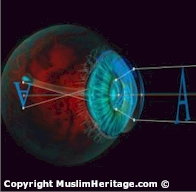
The man was standing still far from the crowd who were walking around the Sacred Stone. While they walked they whispered inaudible prayers which, pronounced by so many attendants gave the feeling of a thousand echoes suddenly tangible by the end of one's fingers. That man stood watching the center of that universe: a black veil covering something so sacred and so trascendental that it seemed that, under the veil it moved like an eye watching in all senses, slowly, rhytmically, while the people walked around it. The man had been walking many days and many nights and sometimes he had not been able to see the stars because of sandstorms and lost his way for three times. That man was now there, and he was not able to move, he had been walking to encounter the unknown. In his state of soul, he felt that the truth was under that veil, that so many people ignored it, while it was watching everything, everybody, every soul and every heart. Then the man, started to do something he used to: he started not to think, but to reflect on what was happening around him. People were building the most sophisticate engines able to cross the atmosphere and travel to regions so far away it was almost impossible to decipher their distance. They were also building theh most expensive machinery to study the inside of the earth, quantities of money, opulent businessmen were involved with scientists, scholars of all kinds to search for the truth. Some were even pointing at the idea of kicking the sun with an enormous engine, in order to know , to understand, the begining of our solar system, the begining of constellations, the beginning of life.
While that man was pondering about all these matters, he was feeling at the same time that, under that black veil, an eye was moving and watching, it was the stone , Adam's stone, it was there, and it was there and not so far that the knowledge of life was helding, that the keys for understanding and the answers for so many questions didn't need the biggest engines, maybe on the contrary, werent' they getting then far from the truth? Or maybe, isn't the explanation here as well? Isn't it , would 'nt it be right here, in front of our very eyes? Like the wise man who asked five men a very difficult question to be solved, the enigmatic question that the five men tried by all means to get with an answer. For this matter they spent days and nights studying and practising with instruments, thinking that the difficult questions need always difficult answers. When finally the wise man asked the men what the answer to his question was, two could not give an answer, two gave an incorrect answer and one only said that he had not understood the question.
"The answer", the wise man said, "has always been there, watching you, but you were completely absorbed by thoughts and principles. If you had seen what was on the table that separated us, you would had seen a key. The key. And the key opens that door over there. And over there there is an old writing explaining the answer."
So perhaps, if we don't look so far, we will see that something is really waiting to be seen. Not only as a cherised element, but as a key for humanity. And a book, in old times, was not in paper, as you know, it was made in clay, and some in stone, and an aerolite, could it be also a key, a book, if we take the meaning of something that is said to have come from the stars in the shape of a stone?
So that man started to cry, because he felt the rythm of that eye, his emotion increased and his tears made his eyes look through the liquid salt, until he sat down and sighed saying "Oh, Beloved, the True Watcher of Mankind. Under this veil lays more than what we can ever imagine."
"Lover of Truth", a strong voice said to his ears, "you don't need to lift up any veil. But you should veil your eyes by closing them and then is when you will see everything."
Maryam
While that man was pondering about all these matters, he was feeling at the same time that, under that black veil, an eye was moving and watching, it was the stone , Adam's stone, it was there, and it was there and not so far that the knowledge of life was helding, that the keys for understanding and the answers for so many questions didn't need the biggest engines, maybe on the contrary, werent' they getting then far from the truth? Or maybe, isn't the explanation here as well? Isn't it , would 'nt it be right here, in front of our very eyes? Like the wise man who asked five men a very difficult question to be solved, the enigmatic question that the five men tried by all means to get with an answer. For this matter they spent days and nights studying and practising with instruments, thinking that the difficult questions need always difficult answers. When finally the wise man asked the men what the answer to his question was, two could not give an answer, two gave an incorrect answer and one only said that he had not understood the question.
"The answer", the wise man said, "has always been there, watching you, but you were completely absorbed by thoughts and principles. If you had seen what was on the table that separated us, you would had seen a key. The key. And the key opens that door over there. And over there there is an old writing explaining the answer."
So perhaps, if we don't look so far, we will see that something is really waiting to be seen. Not only as a cherised element, but as a key for humanity. And a book, in old times, was not in paper, as you know, it was made in clay, and some in stone, and an aerolite, could it be also a key, a book, if we take the meaning of something that is said to have come from the stars in the shape of a stone?
So that man started to cry, because he felt the rythm of that eye, his emotion increased and his tears made his eyes look through the liquid salt, until he sat down and sighed saying "Oh, Beloved, the True Watcher of Mankind. Under this veil lays more than what we can ever imagine."
"Lover of Truth", a strong voice said to his ears, "you don't need to lift up any veil. But you should veil your eyes by closing them and then is when you will see everything."
Maryam
Category:
sufi thoughts
mystical thoughts
sufism
tasawwuf