Glossary of Sufism 13 and 14:muhasaba wa' (and) l-musharata
Monday, December 28, 2009 By Maryam
Muhasaba wa'l-musharata المحاسبة والمشارطة
“Soul searching” (Muhasaba) consists in blaming oneself for the breathings (anfas) and wasted moments other than to obey God through different ways. It happens at the end of the day, like the coordination (musharata) takes time in the beginning of day, when one says to oneself: “Here is a new starting day which will be a witness against you; try then, Oh my soul, to fill every instant with what takes you closer to God; because, if you had died the day before, you would have been in need of the goodness that you would enjoy today.” It is this way that one addresses to the soul when the nights is gong to start and that is examined the moment when the night ends, this with tenacity until the Divine presence settles steadily in it. Then, time will gather in the unique moment (yattahid al-waqt), which corresponds to the dip in the vision (shuhud), and there will not be examiner nor punisher. So, as long as the spiritual progression (al sayr) lasts, coordination comes first, soul searching comes last and the watchfulness -prudence (muraqaba) is done in permanence. Once the intention is attained, there is no more soul searching nor coordination.
Translated from Glossaire du Soufisme, by Iban Agibah, edited by A. Saleh Hamdan.


GLOSSARY OF SUFISM 12. Muraaqabah
Monday, December 07, 2009 By Maryam
Watchfulness
( muraaqabah )
She is the source of all goodness, and the contemplation (mushaahada) is at its level: whoever keeps an extreme watchfulness will attain an extreme contemplation.
To the exoterics (ahl al-zaahir), watchfulness consists in the preservation of the external organs from distractions (hafawaat); to te esoterics (ahl al -baatin), it consists in not letting the heart to be taken by self-propagating thoughts (khawaatir), and by distractions (ghafalaat); to the deepest esoteric ones, watchfulness consists in keeping the deep inner being (sirr) from resting in everything but the divine Presence.
Translated from Glossaire du Soufisme, by Iban Agibah, edited by A. Saleh Hamdan.
sufi masters,
sufi teachers,
glossary of sufism,
muraaqabah,
tasawwuf,
watchfulness,
Sufism, the Heart of Islam
Sunday, April 26, 2009 By Maryam
On the evening of April 23rd, 2009, author Sadia Dehlvi was beaming like a happy child in her Nizamuddin East drawing room. Finally, she had her first book, Sufism, The Heart of Islam, clasped tightly in her hands. Earlier in the day, Harper Collins India, Ms Dehlvi's publisher, had sent her a copy of the book hot off the press. Notwithstanding her excitement, The Delhi Walla pestered her for an interview over a cup of green tea.
Pearls of Wisdom / Perlas de Sabiduría
Friday, April 17, 2009 By Maryam
I have added a few more articles at the “Pearls of Wisdom” section.
Thanks to: The Sufi
and
via “Foods for thought”
He añadido algunos artículos sobre sufismo en la sección “Pearls of Wisdom”.
Ya Haqq,
Maryam
Pir
Wednesday, April 15, 2009 By Maryam

The path of Sufism starts when a student takes an oath of allegiance with a teacher called Bai'ath or Bay'ah (Arabic word meaning Transaction). After that, the student is called a Murid (Arabic word meaning committed one).
A Pir usually has authorizations to be a teacher for one (or more) Tariqahs (paths). A Tariqah may have more than one Pir at a time. A Pir is accorded that status by his Shaikh by way of Khilafat or Khilafah (Arabic word meaning succession). Khilafat is the process in which a Shaikh identifies one of his disciples as his successor (khalifah). A Pir can have more than one khalifah.
From WIKIPEDIA
On the image: Pir Zia Inayat-Khan.
Pir Zia is the son and successor to his father Pir Vilayat Inayat Khan. He is the present head of The Sufi Order of the West and the founder of Suluk Academy. He has studied comparative religion and oriental languages (Arabic Urdu and Persian) at London University and received his PhD from Duke University. Like his father he is a master of meditation and profound Sufi mysticism.
GLOSSARY OF SUFISM 11. RIDAA WA’ L-TASLIM
Wednesday, April 15, 2009 By Maryam
الرضى و التسليم
Contentment in submission
(ridaa wa’ l-tasliim)
“Contentment” (al-ridaa) is to face the vicissitudes with a smiling face; or a joy that fills the heart when the divine rules happen; or to let the decision (tark al-ikhtiyaar) to God in all that God organizes and does; or to feel at ease (sarh al-sadr) and free from criticism (inkaar) in relation with what comes from The One Almighty.
“Submission” (al-tasliim), is to let with serenity that God organizes and decides the course of destiny. It is a synonym of “contentment” if we consider the last definition of “al-tasliim”. But the contentment is higher in the other senses. It is said that contentment appears the moment when the divine rule is realized, while submission comes before: it is then called tafwiid, -total acceptation- in a proper sense.
Both of them start by the constancy – steadfastness - (sabr) and the internal fight (mujahaada); their middle stage is the suspension of agitated and bitter thoughts; their completion is in the joy, the tranquility, the absence of agitation.
The first degree is the vulgar one; the second, the one belonging to the elite; the third degree belongs to the chosen elite.
The first thought which happens [when the test takes place] is forgiven, according to the general opinion, because of the weakness of human nature, as no human being is exempt of having it.
Translated from Glossaire du Soufisme, by Iban Agibah, edited by A. Saleh Hamdan.
Glossary of Sufism 10. Tawakkul
Sunday, April 12, 2009 By Maryam
التوكل
Abandonment to God
(tawakkul)
The “abandonment to God” happens when the heart confides in God to a point that the heart only leans on God; or to be tied to God and address only to God in everything, knowing that God knows everything, and to count on what is in His hands than what is in ours. The lowest degree of “abandonment to God” is to be in the same position as when the asker is in front of the giver, alert and anxious about his interests. De medium degree is like when it happens with a child and his mother: in all circumstance, it is only towards him that she focuses her attention. And the highest degree of “abandonment to God” is to be like a corpse – dead body - in the hands of the washer of the dead.
These three degrees are, respectively, the ones of the vulgar, the ones of the elite and the ones of the chosen elite. As for the first ones, a suspicion (tuhma) comes at times to the mind. Regarding the second ones, there is no wariness (ittihaam) but they get attached to their mothers because they are in need for it. And as for the ones belonging to the third degree, there is no suspicion at all, nor “interested” attachment, because they fade to their own soul (faani ‘annafsihi) and expect at all times what God will make from them.
Translated from Glossaire du Soufisme, by Iban Agibah, edited by A. Saleh Hamdan.
For further reading:
Tawakkul. From Mission Islam
Tawakkul. From Hizmetbooks
Love’s Calligraphy
Friday, April 10, 2009 By Maryam
'Enlightened by sight'
Ahmed Darwish reviews the life of one of Egypt's most distinguished calligraphers

Calligraphy may seem to be a luxury, as it requires a skill and takes too much time, especially at a time when most of us spend our days hunched over a keyboard, the nostalgia for beautiful writing is hard to resist.
To read more click here
The Other Islam: Sufism and the Road to Global Harmony (Kindle Edition)
Wednesday, April 08, 2009 By Maryam

From Publishers Weekly
Schwartz, a journalist and convert to Islam, offers Sufism, the mystical branch of Islam, as an aid to the United States' efforts to fight extremism. He provides an incomparable history of Sufism, covering in one short book all the major Sufi saints, schools, and the persecution of Sufis by Wahhabis. Deeply anti-Wahhabi, Schwartz encourages U.S. policymakers to ally with Sufis to undermine the Wahhabi influence. Schwartz believes the Wahhabi philosophy, which is literal and extreme in its interpretation of the Islamic faith, to be the motivation behind Muslim terrorism, with Wahhabi Saudis providing the financing. Wahhabis abhor Sufis for centuries-old traditions they label as idolatrous. Schwartz critiques the Western media for inaccurately dismissing Wahhabi attacks on Sufis, including the insurgency in Iraq, as Sunni-Shia disputes. In reality, Schwartz argues, they are part of the centuries-long Wahhabi campaign to destroy Sufism and moderate Islam. Schwartz's opinion—that Sufis are the natural allies of the U.S. in the ongoing war on terror—is well presented and worth considering. (Sept. 16) ""
Copyright © Reed Business Information, a division of Reed Elsevier Inc. All rights reserved."
Review
Advance Praise for The Other Islam
Stephen Schwartz is internationally known as a serious student of Islam and its mysticism and as a special friend of the Bektashi Sufi order. The Other Islam is an important work that will, I sincerely hope, open the minds of non-Muslims as well as Muslims to the heritage and present reality of spiritual Islam. Let this book help spread the message and enlightenment of Hajji Bektash Veli throughout the world. —H.E. Hajji Dedebaba Reshat Bardhi, World Supreme Head of the Bektashi community
The Other Islam is more than an engaging introduction to Sufism in full. Stephen Schwartz has also sketched a suggestive roadmap for the kind of inter-religious dialogue that can move the world beyond the clash of civilizations to a mutually enriching encounter of noble religious traditions. Schwartz’s Sufi-inspired conviction that it is, finally, God’s world, not one in which nihilism married to distorted monotheism will have the final word, can and should be embraced by serious Jews, Christians, and Muslims alike. —George S. Weigel, Distinguished Senior Fellow, Ethics and Public Policy Center, and biographer of Pope John Paul II
The Other Islam presents a different side of the Muslim world and Islam, at a time when Islam is identified in the West with militancy, violence, radicalism, and terrorism. Stephen Schwartz gives readers a good picture of how we should look at Islam’s full spectrum of doctrines and interpretations, and understand that Jihad can be interpreted and implemented by peaceful and spiritual ways. His contribution to the understanding of the other dimensions of this worldwide religion and culture, especially now, is very significant. We should all wish for a greater role for the various Sufi orders in the socio-political culture of the Muslim world. —Reuven Paz, Director, Project for the Research of Islamist Movements (PRISM) of The Interdisciplinary Center, Herzliya, Israel
This book can be found at www.amazon.com
Ocean of My Dreams
Tuesday, March 31, 2009 By Maryam

A fusion of poems by renowned poets expressing their love and desire for God:
Rumi, Ibn Arabi and Amjid Yaseen.
THE ELEMENTS OF SUFISM
Friday, February 04, 2005 By Maryam
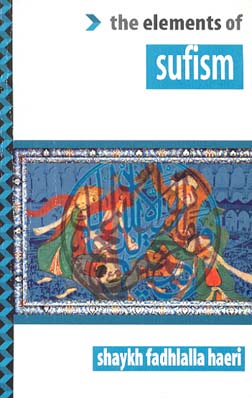
THE ELEMENTS OF SUFISM
(Excerpts Only)
By: Shaykh Fadhlalla Haeri
Publisher: Element Books (June, 1990)
ISBN: 185230068X
Chapter 1
Definitions of Sufism
and
Chapter 2
The Early Development of Sufism
PAGE SOURCE
Permission kindly granted by:
http://www.nuradeen.com/
Category:
sufism
tasawwuf