Peaceful
Thursday, December 20, 2007 By Maryam


Woman
Wednesday, December 19, 2007 By Maryam
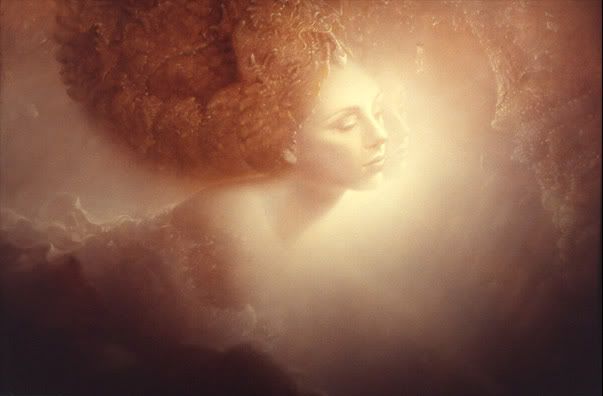
Rumi looked upon women as the most perfect example of God’s creative power on earth. In Masnavi-I Ma'navi (spiritual couplets), his monumental mystical work, Rumi calls woman, “a ray of God”. “She is not just the earthly beloved, She is creative, not created”.
“Rumi is one of those rare spiritual masters who had female disciples. This is not so common in the history of Sufism.
Rumi’s letters, teachings, advice to his son to be kind to his wife and the tenderness he showered on his own wife— show how sacred the feminine was to the poet,” points out Dr Leili Anwar-Chenderoff, Head, Iranian Languages Department, INALCO (Institut des Langues et Civilisations Orientales), Paris.
Read More
sufism
tasawwuf
sufi poems
sufi masters
 tasawwuf
Powered by ScribeFire.
Eternal Path
Monday, December 17, 2007 By Maryam

The eternal path of Sufis commences with their approach to daily life. Soul remains the primary tool in search of Reality. Body serves only as means of ensuring physical health, and the care for it is provided as to a camel in a caravan – without adoration and contemplation, for camel is merely a device to reach the destination (al-Ghazzali, Ch.2, p.47.)
From
Analysis of Sufism Through Art of Sufi Poetry
sufism
tasawwuf
sufi poems
sufi masters
tasawwuf
Glossary of Sufism. 7. Shukr
Monday, December 17, 2007 By Maryam
Gratitude
Thankfulness
It comprises three modalities: gratitude through the tongue, which is the fact of humbly acknowledging that we have received some goodness and we then express it; the physical gratitude (bi'l-badan) which can be translated by the eagerness to serve (khadma); the gratitude from the heart, which consists in seeing the Almighty in the Goodness.
These three modalities are mentioned in the words by Junayd: "Be not the Almighty be disobeyed from the Almighty's own goodness." (because of, due to).
The gratitude in the vulgar is the thankfulness through the tongue. The gratitude in the elite is the given service through the respect of the fundamental or basic prescriptions (arkaan).
The gratitude in the chosen ones is the immersion in the vision of the All Goodness Giver (al-Manmaan).
Translated from Glossaire du Soufisme, by Iban Agibah, edited by A. Saleh Hamdan.
sufism
tasawwuf
sufi poems
sufi masters
tasawwuf
Sufi Poem
Wednesday, December 12, 2007 By Maryam

Soul receives from soul that knowledge, therefore not by book
nor from tongue.
If knowledge of mysteries come after emptiness of mind, that is
illumination of heart.
~Rumi
Soul
Monday, December 10, 2007 By Maryam
Friday, December 07, 2007 By Maryam

“…O, my soul! where would you find your house?”
Jahane Rumi
Subscription Updates
Friday, December 07, 2007 By Maryam
FeedBlitz did not reach my account since Gmail reinforced the spam filters. So everything was sent to the spam folder. If you use FeedBlitz and are not receiving the updates for this blog, please check the spam folder and add the service to your contacts.
Regarding R.mail.. this service has migrated to another website and has a new name: SendMeRss.com. Therefore, the account at R-mail is inexistent since a few weeks ago. Please, check under the FeedBlitz service on this page (Left Pane) and see the new widget for SendMeRss.com in the case you would like to subscribe to this blog using their free service.
The spam politic has given problems to the subscription delivery but we only have to think it is for the best:-)
Ya Haqq,
Maryam
Powered by ScribeFire.
Dear Readers,
Friday, December 07, 2007 By Maryam
Powered by ScribeFire.
The meaning of "Good Character" in the Modern Age...
Friday, December 07, 2007 By Maryam
We see that in our days the meanings of things have greatly changed and the values of all things have been reversed. Hazrat Maulana Qari Muhammad Tayyib Sahib [ra] of Deoband used to say: As compared with the past everything has turned upside-down in the present age. For example, in the olden days there was darkness beneath the lamp and now there is darkness above the bulb. Today values have changed and so has changed the import of everything, so much so that even the meaning of character has undergone a total change. Today only some outer acts and expressions of modern etiquettes are regarded as tokens of good character. For example, it is regarded sign of good character to meet someone with a smiling face or to utter formal pleasing words. I am very glad to see you, it is pleasing to meet you, etc. while the heat of enmity, jealousy and hatred is burning in the hearts.
Today this way of behaviours has been named good behaviour and character. It has been recognised as an art, how to deal with others so as to make them impressed with our personalities.
To read more about this article, please follow this Link
sufism
tasawwuf
sufi poems
sufi masters
tasawwuf
Powered by ScribeFire.
Lines from a Mystic
Thursday, December 06, 2007 By Maryam
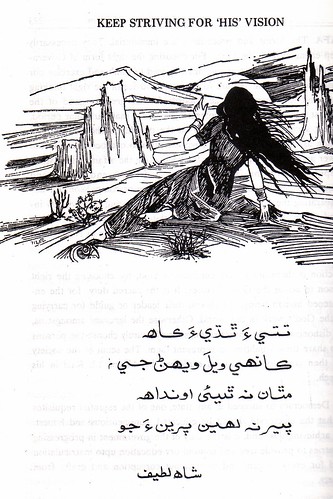
Lines from a Mystic
The translation of these Sindhi verses of Shah Abdul Latif by Elsa Kazi are as follows:
Keep marching in heat or cold,
There is no time for rest:
Lest darkness should set in,
And you lose the Beloved's track
sufism
tasawwuf
sufi poems
sufi masters
tasawwuf
conference of the birds
Thursday, December 06, 2007 By Maryam
sufism
tasawwuf
sufi poems
sufi masters
tasawwuf
Hello Sufism
Thursday, December 06, 2007 By Maryam
Visit
sufism
tasawwuf
sufi poems
sufi masters
tasawwuf
THE AESTHETICS OF MOTION IN MUSICS
Thursday, December 06, 2007 By Maryam
Victor A. Vicente
Doctor of Philosophy,2007
This dissertation investigates the concept of motion as a fundamental aesthetic
element in the devotional music, dance, and rituals performed in honor of the celebrated thirteenth-century Persian mystic poet and saint, the Mevlana Celal ed-Din Muhammad Rumi. The main focus of the study is threefold. First, it investigates the prevalence of the notion of movement in Islamic music and culture, specifically within the Sufi communities of Turkey, in order to arrive at a broader understanding of the relationship between music, aesthetics, and worldview. Secondly, it explores how musical performance functions as a form of devotion or religious worship by focusing on the musical repertories performed in honor of a single holy figure, the Mevlana Rumi.
Finally, it provides an ethnographic account of contemporary developments in Sufi
musical culture in Turkey and across the world by describing the recent activities of the Mevlana’s devotees, which includes members of the Mevlevi Order of Islamic mystics as well as adherents of other Sufi brotherhoods and followers of so-called New Religions or New Age.
The primary research for this study involved two short one-month field trips to
Turkey and India in 2002 and 2003, respectively, and a longer one year expedition to
Turkey in 2004 and 2005, which also included shorter stays in Cyprus, Syria, and Egypt.
Additionally, the dissertation draws directly from critical theories advanced in the fields of ethnomusicology, cultural anthropology, and ethnochoreology and focuses on the kinesthetic parameters of music, dance, trance, and ritual as well as on broader forms of socio-cultural movement including pilgrimage, cultural tourism, and globalization. These forms of movement are analyzed in four broad categories of music used in worship, including classical Mevlevi music, music of the zikr ceremony, popular musics, and non-Turkish musics.
If interested in the reading, please visit this page to get the document in pdf (it takes a while to download due to the extension of this document)
sufism
tasawwuf
sufi poems
sufi masters
tasawwuf
Light Upon Light. The Art of Sufism
Thursday, December 06, 2007 By Maryam
sufism
tasawwuf
sufi poems
sufi masters
tasawwuf
With its spiritual tradition, 'the Sufi way' is an age-old alternative for radicals and modernists alike.
Thursday, December 06, 2007 By Maryam
By Jane Lampman | Staff writer of The Christian Science Monitor
from the December 5, 2007 edition
Images of Islam have pervaded the news media in recent years, but one aspect of the faith has gotten little attention – Islamic spirituality. Yet thousands in America and millions in the Muslim world have embarked on the spiritual path called Sufism, or the Sufi way. Some see its appeal as the most promising hope for countering the rise of extremism in Islam.
In recent weeks, celebrations in cities on several continents have marked the "International Year of Rumi." Sept. 30 was the 800th anniversary of the birth of Muslim mystic Jelaluddin Rumi, who is a towering figure in Sufi literature and, paradoxically, the bestselling poet in the United States over the past decade.
In the West, Sufism has appealed to seekers attracted by its disciplined spiritual practices as well as its respect for all faiths and emphasis on universal love.
"I was searching, and the writings struck me – particularly the poetry," says Llew Smith, a TV producer in Boston who has joined a Sufi order. "It's direct and consistent about turning you away from the self, but also being connected deeply to the Divine and to other people."
Across the Muslim world, Sufism has been an influential force throughout Islamic history, though it has frequently come under attack by more orthodox Muslims. Some consider it an Islamic heresy because Sufis go beyond the faith's basic tenets and pursue a direct union with God.
Many Muslims today, however, see the spiritual tradition as the potential answer to the extremism that has hijacked the faith and misrepresented it to the world.
"In the Islamic world, Sufism is the most powerful antidote to the religious radicalism called fundamentalism as well as the most important source for responding to the challenges posed by modernism," says Seyyed Hossein Nasr, professor of Islamic studies at George Washington University in Washington, D.C.
Dr. Nasr has written a new book, "The Garden of Truth," to present Sufi teaching in contemporary language.
"Its influence is immense," Nasr adds. "Sufism has kept alive the inner quality of ethics and spiritual virtues, rather than a rigid morality ... and it provides access to knowledge of the divine reality," which affects all other aspects of one's life.
( To read more about this article, follow this link )
sufism
tasawwuf
sufi poems
sufi masters
tasawwuf
Powered by ScribeFire.