GLOSSARY OF SUFISM
Thursday, July 28, 2005 By Maryam
التصوف
1. tasawwuf
"s" pronunciation as in "sorry"
"Sufism" (tasawwuf) is the science through which we can attain the modalities for our journey toward the King of kings; it is also the inner purification (tasfiya) from the vices (radhaa' il) and the inner beauty by the means of all virtues (fadhaa'il); or the erasing (ghayba) of the creature, be it lost in the vision (shuhuud) of Truth (God; al-Haqq), or going back to the manifested world (al-athar).
Its beginning is "science" ('ilm), its medium "action" ('amal) and its aim "gift" (mawhiba) [from God].
Regarding the word itself, it derives:
-possibly from safaa', purity, as its aim is purification (tasfiya) ;
-possibly from sifa, quality, because it is the qualification (ittisaaf) derived from perfections ;
-possibly from suffa, the "bench" at the Prophet's Mosque, as the sufis look very much like the People of the Bench from their orientation [towards God] (tawajjuh) and from their renouncing to the world (inqitaa') ;
-and possibly from suuf, the wool, because most of them used to wear garments made with wool as a sign of detachment of the things from this world, and also imitating those Prophets that were dressed with clothes made in wool.
This last etymology seems the most convincing from a linguistic point of view, it also corresponds in a better way to the literal sense. Effectively, the garment made in wool is what has a connection with the external judgment (hukmzaahir), based on the appearances, while the other derivations imply an inner interpretation (baatin) ; but the external interpretation is more direct. It is said: "he has taken the suuf" (tasawwafa) from someone who is dressed with wool, as well as it is also said: "taqammasa" from someone who has dressed himself with a shirt (qamiis) , and this person is qualified as "suufii".
Sahl [al-Tustari] said: "The sufi is someone who is pure (safaa) from trouble (kadar), he is filled with thinking (fikr) and has renounced to the human for the Divine ; someone for whom gold and mud have the same value", that is to say, someone who doesn't desire or wish anything but his Lord and Master.
Al-Junayd said: "The sufi is like the earth: the rubbish is thrown over it, and only good things come up". He also said: "The sufi is like the earth, a place where both an innocent and a guilty walk on in, like the sky that shadows everything, like the rain that waters everything".
(Translated from
Glossaire du Soufisme. Ibn 'Agibah. A. Saleh Hamdan)
Glossary of Sufism
sufism
tasawwuf
sufi poems
sufi masters
7j
Monday, July 11, 2005 By Maryam

My heart cannot comprehend where I am
Or where I think I am
I ask to myself and then the answer comes so clear
Struggle.
The shining stars remind me of the rain that doesn't fall
Like the stars I watch the tiniest particle of our home without doors
where the wind trespasses our soul and tries to take it away with it.
What sort of home did we built?
sacred blood? sacred hate?
How could this be?
Looking down, forgetting the stars, there is a big well
where the eyes are searching for what is pure
to feed the empty souls to then make it disappear again
being hungrier
thirst that never ends.
I long for my heart then
but not alone
I hear the murmurs weeping and flowing upwards
melting with the moon
melting with the stars
Again the hearts convey to talk
and see
what others don't want to let us see
The Immensity of Love
that we could give
to stop the imbalance of our precious nature
taken away, so far....
that at times we feel we are gone forever from it.
Our hands can stop a grenade to fall down
but our Love can stop the well to continue pulling us down
Maryam
source
There is a Candle in Your Heart
Monday, July 11, 2005 By Maryam

sufism
tasawwuf
sufi poems
sufi masters
Good to read
Monday, July 11, 2005 By Maryam
a) The place of Tasawwuf in traditional Islam-©Nuh Ha Mim Keller 1995
b) What is this "Sufism" that some love and other people hate?
c) Spiritual Sufi Training is a Process of Individuation Leading Into the Infinite - by Irina Tweedie
d) Getting to know the Sufis
Categories:
sufism
tasawwuf
Master of the Jinn, by Irving Karchmar
Sunday, July 10, 2005 By Maryam
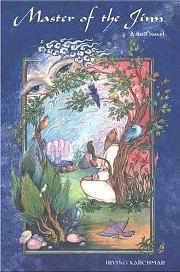 Considered by some Amazon.com reviewers as a "Masterpiece of Modern Islamic Mysticism" and "Awe Inspiring Mystical Adventure", Master of the Jinn, written by Irving Karchmar is a spiritual book which brings wisdom and hidden truths to those mystics (from any religion and thought) through didactic means, as well as parables, imagination, and above all, treasures covered with simplicity. I have personally read some excerpts from this book, and the truth is, I saw a lot of my personal struggle, my discoveries, reflected all through these lines.
Irving Karchmar, the 59 year old author of Master of the Jinn, holds a Masters degree in Philosophy from DePaul University in Chicago. He has been a poet, writer, editor and publisher for many years, and a darvish of the Nimatullahi Sufi order since 1992. He now lives in Sag Harbor, New York, where he is currently at work on his second novel, a sequel entitled Tale of the Jinn.
Here are two audio excerpts from the book. The first one belongs to the Book 1, Chapter 1, entitled "The Master". The second one is a story called "The Judgement of God. A Sufi Tale".
Gather and enjoy.
Master of the Jinn. A Sufi Novel by I. Karchmar. Excerpts
MP3
The Judgement of God . A Sufi Tale, by Irving Karchmar
MP3
Related to the author:
"Masters of the Jinn" homepage
"Sufi Blog"
Categories:
sufi books
sufism
tasawwuf
sufi masters
Labels:
audio,
audio posts,
English,
irving karchmar,
literature,
master of the jinn,
sufi literature


Glossary of Sufism (Introduction)
Thursday, July 07, 2005 By Maryam
Here are the most essential terms that constantly are used in sufi treatises, studies, conferences and even in poems. I have not included the phonetical accents as this will come later. Just for you to have right now a view of the series of words and expressions in a simple way. As we will learn each time one of these words and its interpretation as well as metaphysical meaning in sufism, the accents will be explained and the way to pronounce each word.
Sometimes the sense of the word, once translated to other languages could vary slightly from the original subtilities inherent in its own meaning and emanation(sometimes word vibrates and follows a natural law along with its meaning) But anyway, it will be very helpful to get used to them, and, little by little, "feel" them in their original language, once every term has been understood and accepted in the soul.
1. tasawwuf
2. tawba
3. inaba
4. khawf
5. raja'
6. sabr
7. shurk
8. wara'
9. zuhd
10. tawakkul
11.-12. ridaa wa' l-taslim
13. muraqaba
14.-15. mushasaba wa'l-musharata
16. mahabba
17.-18. mushahada wa'l - mu'ayana
19. ma' rifa
20. taqwa
21. istiqama
22. ikhlas
23. sidq
24. tuma' nina
25.-26. shawq wa'l-ishtiyaq
27. ghayra
28. futwwa
29. irada
30. murid
31. mujahada
32. walaya
33. hurriyya
34. 'ubudiyya
35. qana'a
36. 'afiya
37. yaqin
38. 'ilm al-yaqin 39. 'ayn al-yaqin 40. haqq al-yaqin
41. ni'ma
42. firasa
43. khuluq
44. jud 45. sakha' 46. ithar
47. faqr
48. dhikr
49. waqt
50. hal 51. maqam
52. qabd 53. bast
54. khawatir 55.waridat
56. nafs 57. ruh 58. sirr
59. nasr 60. ta'yid 61. 'isma
62. hidaya 63, rushd 64. tasdid
65. hikma
66. 'aql
67. tawhid
68. tafrid
69. ahadiyya 70. ihad 71. fardaniyya
72. wahdaniyya 73. infirad
74. haiqat al-dhat al-'aliyya
75. 'amaa
76. fanaa' 77. baqaa'
78. qudra 79. hikma
80. farq 81. jam'
82. hiss 83. ma'naa
84. mulk 85. malakut 86. jabarut
87. nasut 88. lahut 89. rahamut
90. tawajud 91. wajd 92. wijdan 93. wujud
94. dhawq 95. shurb 96. sukr 97. sahw
98. mahw 99. ithbat
100. sitr 101. tajalli
102. muhadara 103. mukashafa 104. musamarra
105. lawa'ih 106. lawami' 107. tawali'
108. -109. bawadit wa'l -hujum
110. talwin 111. tamkin
112. qurb 113. bu'd
114. shari'a 115. tariqa 116. haqiqa
117. dhat 118. sifat
119. anwar 120. asrar
121. -122. dama'ir wa'l-sara'ir
123. nafas
124. fikra 125. nazra
126. shahid
127. khamra 128. ka's 129. sharab
130. murid 131. faqir 132 malamati 133. muqarrab
134. 'ubbad 135. zuhhad 136. 'arifun
137. salihun 138. awliya' 139. budala' 140. nuqaba'
141. nujaba' 142. awtad 143. qutb
sufism
tasawwuf
Glossary of Sufism
al-Qushayri and his Treatise. The Moment (waqt)
Thursday, July 07, 2005 By Maryam
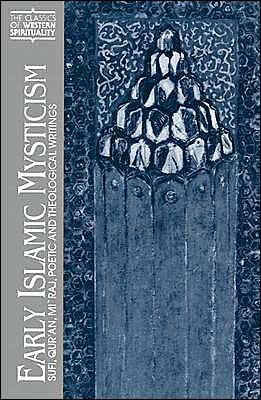
The following is an excerpt from the book "Early Islamic Mysticism", by Michael A. Sells, when the author introduces us to al-Qushayri in a chapter entitled "Interpreting Mystical Expressions from the Treatise".
Who was Qushayri and what is the importance of his metaphysical study "the Treatise"? Here is the introduction written by Sells and a short excerpt belonging to chapter III of "the Treatise":
Qushayri:
Interpreting Mystical Expressions from the Treatise
Interpreting Mystical Expressions from the Treatise
In refinement of style, ability to combine a searching discussion of the most difficult concepts with a lucid and readable exposition and combination of precise analysis with theatrical anecdote, few works rival the famous Treatise of Qushayri.
'Abd al-Karim ibn Hawazin al-Qushayri (d. 465H/1074CE) was born near Nishapur in the Khurasan area of what is present day Iran. He received the full Islamic education of the time, memorizing the Qur'an, studying Islamic law (fiqh) and Ash'arite theology, and becoming a disciple to the Sufi master Abu 'Ali ad-Daqqaq (d. 378/988) and Sulami (d.412/1021). Qushayri's Treatise became so popular that it is known simplyas the Qushayriyyan Treatise or the Treatise. It is perhaps the most popular classic work on Sufism, admired for its subtlety, acuity, and clarity.
Presented here is section three of the Treatise, the section on key Sufi terms and concepts. The intricate discursive texture of the section is immediately apparent. The analysis of each major concept is woven around the sayings of earlier Sufis. Qushayri is particularly fond of unattributed proverbs, introduced by phrases such as "they say", "some say", or "someone said."
..................
Realized masters emply the term "moment" (waqt) to refer to the relation between the anticipation of an event and the event's actual occurrence.
Conversely, the actual occurrence can be considered the moment of the anticipated occurrence. You say, for example: "I'll meet you at the beginning of the month." The meeting is an anticipation. The beginning of the month is actual occurrence. Thus, the beginning of the month is the moment of the meetings.
I heard the teacher Abu 'Ali ad-Daqqq, God's mercy upon him, say: "The moment is what you are in. If you are in the world, your moment is the world. If you are in the afterworld, your moment is the afterworld. If you are in happiness, your moment is happiness. If you are in sorrow, your moment is sorrow." By that he means that the moment is that which dominates a person.
Some people mean by the moment the time in which a person happens to be. Some of the folk say that the moment is between two times, between the past and the present.
They call the Sufi "a son of his moment" (ibn waqtihi), meaning that he is completely occupied with the religious obligation of his present state, carrying out what is demanded of him at the time. It is said that one who embraces poverty has concern neither for the moment past nor for the moment to come. He is concerned only with the present moment in which he finds himself. They also say: "to be preocuppied with a past moment is to lose a second moment."
By moment they can also mean that which happens to them through the dispositions of the real that come upon them without any choice on their part. They say: "So and so is in the power os his moment," that is, he surrenders to whatever comes over him, without his own will, from the unknown. This meaning applies only for those things that are not under God's prophetically given command or injunction. To neglect or to consign to providence what has been commanded or to neglect the complete carrying out of the command is to be outside the faith.
They say: "The moment is a sword", that is, just as the sword is cutting,so the moment prevails in what the real brings to pass and completes. It is said: "The sword is gentle to the touch, but its edge cuts. Whoever handles it gently is unharmed. Whoever treats it roughly is cut." Similarly for the moment, whoever submits to iis decreee is saved, and whoever opposes it is thrown over and destroyed. In this regard they composed the following verse:
Like a sword - if you handle it gently
its touch is gentle,
but its edges, if you treat it roughly
are rough.
When the moment favors someone, the moment for him is just a moment. When the moment opposes someone, the moment for him is loathing.
I heard my teacher Abu 'Ali ad-Daqqaq say: "The moment is a file. It files you down without effacing you." He means that were it to efface you and make you pass away, you would be -in your passing away- liberated.
However, the moment takes from you without entirely annihilating you.
He recited in this regard:
Every day that passes
takes part of me,
leaves my heart a portion of loss,
and passes away.
He also recited:
Just as the people of fire
when their skin is well roasted
have prepared for their wretchedness
new skin.
And with similar meaning:
No one truly dies
who finds rest in dying.
To truly die
is to live your death.
sufism
tasawwuf
sufi poems
sufi masters
Wednesday, July 06, 2005 By Maryam

Oh Beloved,
take me.
Liberate my soul.
Fill me with your love and
release me from the two worlds.
If I set my heart on anything but you
let fire burn me from inside.
Oh Beloved,
take away what I want.
Take away what I do.
Take away what I need.
Take away everything
that takes me from you.
Rumi
Again, an Introduction
Wednesday, July 06, 2005 By Maryam
 Although this blog treats different aspects and people related to Sufism, my first endeavour is to spread the knowledge of Sufism under different levels, and above all, its introduction (the roots, the source itself) to those who have a slight idea of it and those who, having attained a deep and high level of spirituality, always love the beginning of little great things. Therefore, I will post here an Introduction to Sufism (Tasawwuf in arabic) that I found very didactic and ranging from its very first beginnings to the spread around the world of the mystic path. It has been written taking sources from various books and compendium encyclopediae, so it will show a quick but also vaste approach to it. Also, check this link for an article entitled "The Path of Tasawwuf Mysticism"
SUFISM
The term "Sufi" derives from the Arabic word "suf" (meaning "wool") and was applied to Muslim ascetics and mystics because they wore garments made out of wool. Sufism represents a dimension of Islamic religious life that has frequently been viewed by Muslim theologians and lawyers with suspicion. The ecstatic state of the mystic can sometimes produce extreme behaviour or statements that on occasion appear to border on the blasphemous. The cause of this is that the Sufis can sometimes feel so close to God that they lose a sense of their own self identity and feel themselves to be completely absorbed into God. This in fact is the goal of the Sufi. Through following a series of devotional practices, which lead to higher levels of ecstatic state, Sufis aspire to realise a condition in which they are in direct communion with God. Ultimately the individual human personality passes away and the Sufi feels his soul absorbed into God.
The origins of Islamic mysticism can be traced back to the 8th century. A consequence of the rapid spread of Islam under the Ummayad dynasty was the exposure of Muslims to a large number of different ethnic groups and the acquisition of considerable wealth that was the fruit of military conquest. The growing opulence of Islam was symbolised by the relocation of the capital of the empire from Medina to the more cosmopolitan city of Damascus. In reaction to the more worldly outlook of the Ummayads various groups and figures emerged who encouraged a return to the pure values of the Prophet and the Qur'an. One such figure, Hasan al-Basri (642-728), preached a rejection of the world and courageously criticised those in power when he felt that they were not conducting themselves according to the ethical standards of Islam. A second figure, Rabi'ah al-Adawiyah (d.801), cultivated the attainment of mystical union with God through the love of God. A third, and controversial, mystic, al-Hallaj (857-922), lived as a wandering preacher who gathered around him a large number of disciples. Such was al-Hallaj's sense of the intimate presence of God that he sometimes appeared to be identifying himself with God. He is reported to have made one statement - "I am the Truth!" - which caused such outrage that he was imprisoned for eight years and in 922 crucified by execution. Al-Hallaj's death illustrates in an extreme way the tensions that would characterise the relationship between Sufi mysticism and the Islamic legal authorities.
The kind of loose master-disciple relationship characteristic of 9th century mystical Islam gradually evolved into organised establishments. By the 11th century there were distinctive groups associated with a particular master. These groups, however, were often not cohesive enough to survive the death of the master. It was only in the 12th and 13th centuries that orders emerged which were stable enough to continue after the death of the founder. This continuity was achieved through the current master nominating a successor who would lead the order following the current master's death. Thus, these orders were able to trace their origins through a chain of masters. Such orders were called tariqahs.
The three regions principally associated with Sufism are Mesopotamia (Iran and Iraq), Central Asia and North Africa. The most important orders to emerge out of Mesopotamia are Rifa'iyyah, Suhrawardiyyah, Kubrawiyyah and Qadiriyyah. These are all among the earliest of the Sufi orders. Rifa'iyyah was founded in Basra, Iraq in the 12th century, soon spreading from Iraq into Syria and Egypt. Suhrawardiyyah, also founded in 12th century Iraq spread westwards into India. Qadiriyyah and Kubrawiyyah are both Iranian orders. Qadiriyyah, the earliest of the two orders, emerged in the 12th century, and spread both eastwards and westwards into India and North Africa. Kubrawiyyah is historically linked to Suhrawardiyyah in that its founder, Nayim al-din Kubra (1145-1221), was a disciple of the founder of Suhrawardiyyah, Abu Najib as--Suhrawardi (1097-1168).
Sufism was transplanted into North Africa as a result of the expansion of the Rifa'i order into Syria and then Egypt. The presence of Rifa'iyyah inspired the founding of other orders. In the 13th century Badawiyyah was founded in Egypt by Ahmad al-Badawi (1199-1276), who acquired a reputation for mysticism and the performance of miracles. This order continues today and thousands of visitors attend its annual festival in Tanta, Egypt.
At about the same time that Sufism was developing in Egypt, it was gaining in strength in North-West Africa through the support of the ruling Almohad dynasty (1130-1269), who ruled over Morocco, Algeria, Tunisia and Muslim Spain. In 13th century Tunisia a certain al-Shadhili acquired a group of disciples and formed who formed the basis of an order that came to be known as Shadhiliyyah. This order continues to flourish in Algeria, Tunisia and Morocco.
In the 18th century the Islamic world fell under the influence of a reform movement called Wahabiyyah. This movement sought to rid Islam of what it regarded as illegitimate innovations such as the worship of saints and to encourage strict adherence to the shari'ah. The spirit of reform spread into North Africa, leading to the establishment of new orders which rejected the more extreme forms of behaviour characteristic of some Sufi orders. An important order that came out of this context is Tidjaniyyah, which was founded in the 1780s by Ahmad al-Tidjani (d.1815) and which rejected many popular Sufi practices such as the adoration of saints. This order continues to exist today and has spread throughout North Africa and western Sub-Saharan Africa.
Another order of this type is Sanusiyyah, which was founded in Cyrenaica (in eastern Libya) in the 1840s by Muhammad b. ali Sanusi (1787-1859). This order was characterised by the rejection of all forms of luxury and a strong sense of veneration for the Prophet. Following the departure of European colonialists from North Africa in the 1940s and 1950s the Sanusis established the state of Libya. The Sanusis were overthrown in 1969 by Colonel Muammar al-Qadafi. Since then the Sanusis have provided an important source of opposition to the Qadafi regime and survive to the present day in spite of the Qadafi regimes attempt to curtail their activities.
In Central Asia and Anatolia (equivalent to modern day Turkey) a number of major Sufi orders emerged between the 12th and 17th centuries. The earliest of these, Yasawiyyah, was founded in the region now known as Turkestan and played a major role in spreading Islam among the Turkish tribes of Central Asia. Possibly deriving from Yasawiyyah is the Bektashiyyah order. According to tradition, Hajj Bektash, the putative founder of Bektashiyyah, originally belonged to the Yasawiyyah order. Bektashiyyah continues to survive in the Balkan region to the present day.
Another Central Asian order is Chishtiyyah. The origins of this order are uncertain, although the founder is generally believed to be Mu'in al-Din Chishti (c.1142-1236), a native of Sijistan. The order gradually spread into India where it remains today as the largest and most important Sufi order.
Mawalwiyyah traces its origins to the famous Turkish mystic and poet al-Rumi (1207-1273). The order's name derives from the Arabic word Mawlana (our master), a title given to al-Rumi by the order. Mawlawiyyah is based in the Turkish town of Konya. Like many Turkish orders it was effectively suppressed when Turkey became a secular state in 1925. In other parts of the Islamic world the once important order has seriously declined or disappeared altogether.
The Naqshbandis, however, have enjoyed more success. Founded by Baha al-din Naqshband (d.1389) in a village near Bukhara in Central Asia, the order gradually spread eastwards into India and westwards into Turkey. Supported by the Ottomans, Naqshbandiyyah flourished until the demise of the Ottoman empire and the establishment of a secular state under Kemal Ataturk in Turkey. Ataturk regarded the Sufi orders as decadent, reactionary and an obstruction to the modernisation of Turkey. In order to reform the state in 1925 he ordered the abolition of all mystical orders in Turkey.
The Khalwatiyyah order was founded in Persia but spread quickly into Anatolia. Out of Khalwatiyyah two other important orders emerged: Bayramiyyah and Jalwatiyyah. Bayramiyyah was founded at Ankara in the 14th century and continued until its dissolution in 1925. Jalwatiyyah was founded in the 17th century by Aziz Mahmud Huda'i (d.1628) who was previously a member of the Khalwati order. Like the other Turkish orders it was banned in 1925 by the Ataturk government; the last master of the order died in 1946.
The abolition of these orders in Turkey demonstrates the kinds of pressures they have encountered as a result of the growing strength of secularism in the world during the modern period. In many parts of the Arab world the orders have all but disappeared. In other parts of the Islamic world, however, they have continued. In North Africa and India Sufism has lost the influence they once had but nevertheless remain a part of the religious identity of the area. The continued existence of such orders suggests the inseparability of religion and its mystical dimension.
------------------------------
Bibliography
Arberry, A.J. Sufism: an Account of the Mystics of Islam. London: Allen and Unwin, 1950.
-----. Muslims Saints and Mystics. London: Routledge and Kegan Paul, 1966.
Baldick, Julian. Mystical Islam. London: I.B. Taurus and Co., Ltd., 1989.
Binge, John Kingsley. The Bektashi Order of Dervishes. London: Luzac and Co., 1994.
Burckhardt, Titus. An Introduction to Sufi Doctrine. Trans. D.M. Matheson. Wellingborough, Northamptonshire: Thorsons Publishers Ltd., 1976.
Lings, Martin. What is Sufism? London: George Allen and Unwen Ltd., 1975.
Norris, H.T. Islam in the Balkans: Religion and Society between Europe and the Arab World. London: Hurst and Co., 1993.
Schimmel, Annemarie. Mystical Dimensions of Islam. Chapel Hill: University of North Carolina Press, 1975.
Stoddard, William. Sufism: the Mystical Doctrines and Methods of Islam. Wellingborough, Northamptonshire: Thorsons Publishers Ltd., 1976.
Trimingham, Spencer J. The Sufi Orders in Islam. Oxford: Clarendon Press, 1971.
Categories:
sufism
tasawwuf
About the Guestbook
Wednesday, July 06, 2005 By Maryam
My excuses.
Maryam
sufism
Friday, July 01, 2005 By Maryam
A dear reader of this blog, Hale, has sent me this beautiful poem that i enjoyed so very much. It's an anonymous persian sufi poem and it was translated by Professor AA Godlas, an inspired and essential person in Tasawwuf (Sufism) in Occident.
I hope you enjoy this poem as much as i and Hale do. Thank You Hale.
I hope you enjoy this poem as much as i and Hale do. Thank You Hale.

WHAT IS TASAWWUF?
What is Tasawwuf? Good character and awareness of God.
That's all Tasawwuf is. And nothing more.
What is Tasawwuf? Love and affection.
It is the cure for hatred and vengeance. And nothing more.
What is Tasawwuf? The heart attaining tranquility,
which is the root of religion. And nothing more.
What is Tasawwuf? Concentrating your mind,
which is the religion of Ahmad (pbuh). And nothing more.
What is Tasawwuf? Contemplation that travels to the Divine throne.
It is a far-seeing gaze. And nothing more.
Tasawwuf is keeping one's distance from imagination and supposition.
Tasawwuf is found in certainty. And nothing more.
Surrendering one's soul to the care of the inviolability of religion;
this is Tasawwuf. And nothing more.
Tasawwuf is the path of faith and affirmation of unity;
this is the incorruptible religion. And nothing more.
Tasawwuf is the smooth and illuminated path.
It is the way to the most exalted paradise. And nothing more.
I have heard that the ecstasy of the wearers of wool
comes from finding the taste of religion. And nothing more.
Tasawwuf is nothing but shari'at.
It is just this clear road. And nothing more.
category:
sufism
Picture source